![[2025シーズンレビュー]<br />
松橋力蔵監督インタビュー](/en/upload/Tokyoism/images/detail_img_912_6941f87d-b4f8-4022-b55b-35330a000292.jpg)


The first half of the league was a tough struggle, but the second half saw a comeback thanks to the contributions of newly joined players. As expectations were placed on the players and their growth was encouraged, the team gradually began to feel a tangible sense of progress. Amid this, what was the coach thinking, and how did he try to move the team forward? This is about the impressions and challenges felt by head coach Rikizo MATSUHASHI in his first year, and what is necessary to aim even higher—.
Persisting Without Wavering
──We struggled in the first half of the league, but the players who joined during the special registration period in June successfully boosted the team, allowing us to accumulate points in the second half.
I think that was one factor. However, I believe they joined a team atmosphere where the players who were struggling had the right attitude and were facing the challenges head-on. It wasn’t just that they were excellent players; there was also the aspect of staff who brought out their strengths. This includes what we have continued to do and the mindset in our daily training sessions. Ultimately, it’s all about the daily accumulation. Both players and staff never gave up and persevered, which I believe was the trigger that led to a positive direction, and we patiently built a good momentum.
──I think the player who became a symbol of such steady progress was Keisuke Sato.
He truly energizes the team with his voice, play, and character. I believe he is a player and a person with a wonderful personality. Like him, players who grasp something and try to connect it to their own results are not afraid of change. Even if what they have inside themselves does not necessarily align with the team’s ideas or roles, they seriously think about what they can do there and continue to face it head-on. At first, when receiving the ball between the lines, he often struggled to face forward and made many control mistakes. The narrower the area became, the more there were situations he couldn’t break through, but I think he is one of the players who made what we aimed to do and my demands his own.
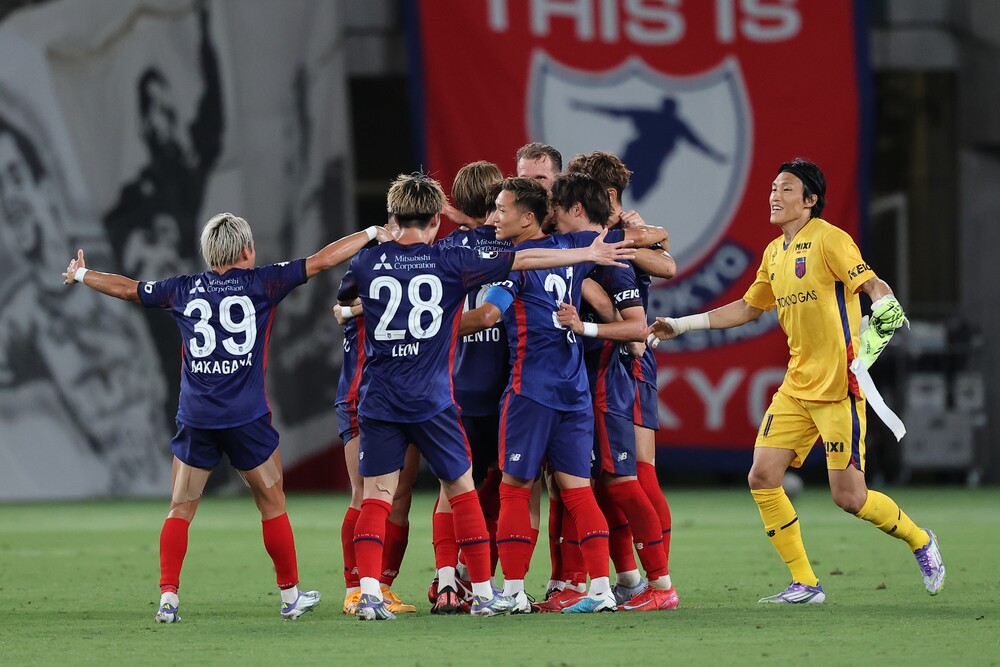
──I think there were many players who grew this season besides him.
For example, Yuto NAGATOMO steadily improved his condition and increased what he could do while deepening his tactical understanding. He himself continues to seek areas where he needs to improve further. In that sense, I believe he is also one of the players who grew. Of course, his defense was solid, but there were also several scenes where he contributed to creating scoring opportunities in attack. He has a different kind of switch from others, such as a challenging spirit. He is a player who maintains his condition and performance while having the attitude to keep improving.
──While there were veterans who continued to grow, Leon NOZAWA significantly increased his playing opportunities throughout this season.
That's right. I have the impression that we were not able to fully give Leon NOZAWA many chances to start, but in the match against Yokohama F. Marinos (June 25, Meiji Yasuda J1 League Sec. 15 postponed match) where he started, he delivered solid results. Even in matches where he came on as a substitute, the number of situations where he got close to scoring has been increasing. There are still moments where he hasn't been able to finish decisively in those scenes, but he is a player who has accepted the place where he is competing, faced what he can do at that time, worked on it daily, and gradually that has started to show in actual matches.
──This season, while the team was struggling, I believe the players and staff saw Kei KOIZUMI quietly wrestling with his own worries and conflicts. How did his presence as captain appear to you?
I think there were times when I caused him some hardship. I was unable to give him many opportunities to start in the lineup, but even so, we maintained communication. Although I can’t say that whether he played in matches was everything after entrusting him with the captaincy, there was definitely a difference in the atmosphere and feeling between standing on the pitch and communicating versus not being on it. From that position, he listened to various consultations and provided great support by understanding the team’s situation through many conversations. His performances toward the end of the season, when he secured playing opportunities, showed that he understood the challenges and was able to demonstrate his strengths in matches.
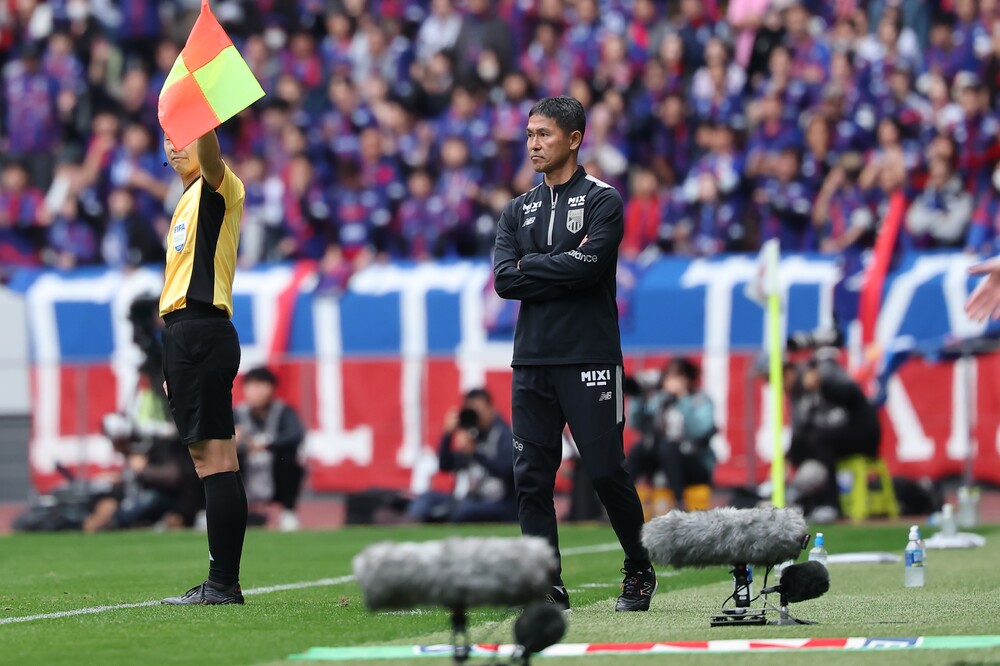
──How do you want to connect this season's battles to the future?
I believe we absolutely must keep going. No matter what kind of match it is when you step onto the pitch, whether you were able to do what you have prepared or not is incredibly significant. Ideally, that will ultimately lead to the next match and the future of the team. It is unacceptable to undervalue or take lightly even a little bit of that. Those who don’t give their all today cannot talk about tomorrow. The world we live in is one where those who don’t work hard today have no tomorrow. First and foremost, I think it’s about sticking firmly to what we envision and what we must do.
They say, "Keep going without wavering," but those of us inside this world fully understand just how difficult that is. That is precisely why I have often said that the important mindset is to "keep the philosophy unchanged, but be flexible in the methods." It’s not about comparing with others; this applies not only to soccer but also to one’s life and way of living. It may sound like I’m speaking arrogantly, but I believe the reason I am who I am today is because I have kept going without wavering. That is why I am currently entrusted with the role of Tokyo’s manager, and why I am able to thrive in this soccer world. I have kept believing and persevering, and because this is a competitive world, there have been times when I have pushed others aside to keep going. If I consider that as my strength, I believe the same applies to the team as well.
──The Emperor's Cup, with the pinnacle in sight, ended in a loss in the Semifinal Round. How does that frustration remain with you?
I believe there were plenty of opportunities, and the players delivered what they had thoroughly prepared. However, I am thinking about whether we can play even more offensively from that match onward. If I consider whether it was an enjoyable game for everyone watching throughout the entire match, it certainly was not. I believe that the style of soccer we aim for should include such elements. We need to express that aspect more. As a personal reflection, I should have thought more offensively. Naturally, since it is soccer, the importance of defense was in my mind, but by showing a slightly more offensive color, there is a possibility that we could have changed the tone of the game, and that thought remains in my head. Of course, there is frustration from losing in the Semifinal Round, but we must accept that this is our current level of ability.
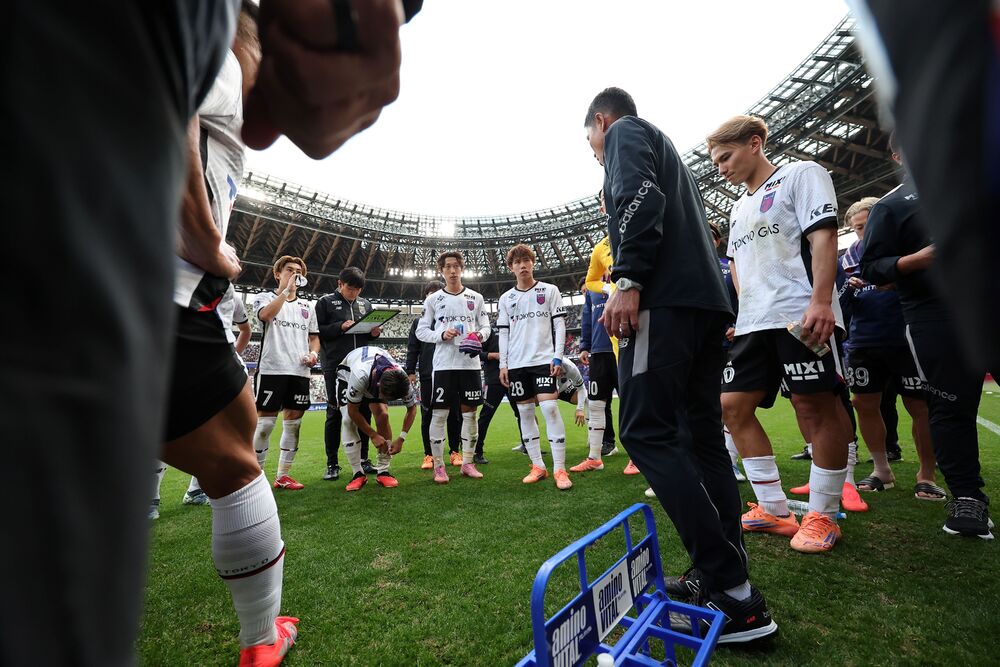
──Looking back at the content of the matches and the data, I think we gradually became able to play while observing how the opponents would respond in the second half of the season.
Tactics, stats, and data are of course important, and how we utilize them could serve as an indicator for the advancement of the soccer world. However, I personally believe that if everything is seen that way, it becomes a conservative perspective. My view of soccer is not something that can be fully expressed by numbers; it lies in the players’ momentary ideas, imagination, creativity, and surprising the opponent. Such tactics certainly exist. I think the joy of soccer comes from discovering various things on your own while playing. Of course, I understand the importance of rational thinking and tactical considerations. We also thoroughly implement those aspects, but if there is no final margin or space left, I feel that it wouldn’t be interesting for the spectators.
──There was also talk about "being more offensive," but if we can play soccer that surpasses high-intensity opponents like Sanfrecce Hiroshima and FC Machida Zelvia, whom we faced in the final stages, it should become the most enjoyable soccer time.
That is absolutely possible. I have experienced that myself, and in the end, it comes down to which way it swings. Of course, I respect the style of soccer that other teams steadfastly pursue. The soccer we aim to play is not about overturning such opponents, but rather being tactical and creative against any opponent. I believe we can play that kind of soccer with this team, and I work on it every day.
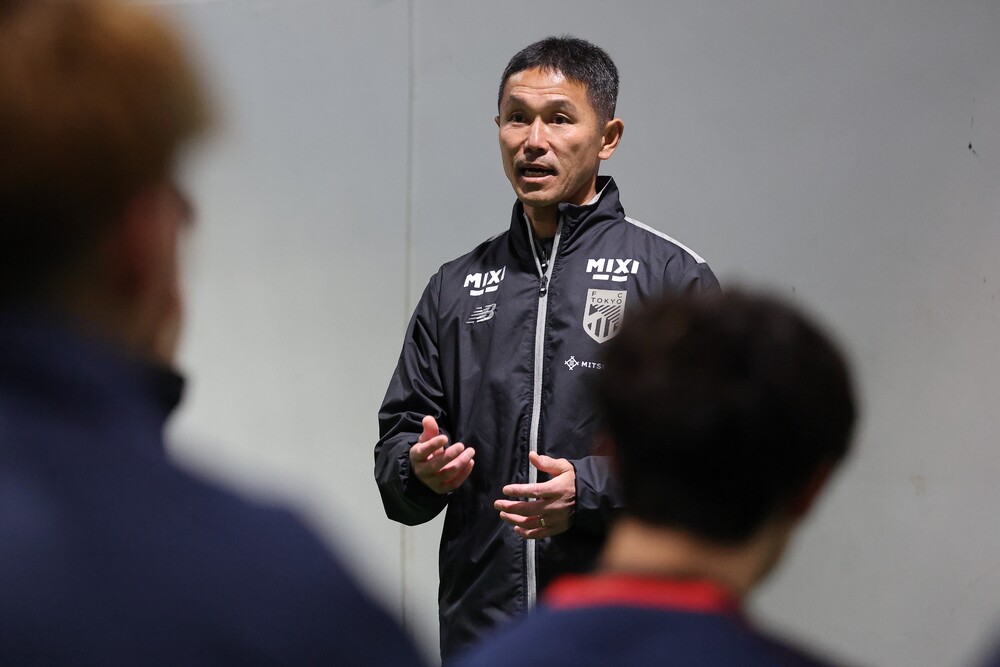
──To realize that, it might connect to the message the coach conveyed to the players before the season started: "Go beyond my imagination." I believe we need to see more players breaking out of their own limits rather than staying within their comfort zones.
I truly believe that, and I want them to challenge themselves to raise and enhance their quality as players. Of course, there may be things that can be calculated. But I want them to be more creative in many ways. I think that creativity exists along a line built on various accumulated foundations. It’s not simply a matter of “just do whatever you want,” but something that exists within a certain flow. That’s why daily accumulation is so important. Take Sato, whose name came up earlier, for example: he had a base of daily effort and accumulation, which led to moments of creativity during the game. For those watching, it looked like his range of play was expanding, his performance was steadily improving, and he was starting to score goals. There was a moment when he grasped a key insight. Isn’t that how players grow? It’s not just about putting in effort repeatedly, but about having steadily worked on the basics and then grasping that key insight. That insight can then be applied not only to one play but to many different things. Even if it doesn’t go well at first, as the base gradually improves and they get used to it, they begin to grasp the key. Once that happens, it seems to branch out into many different areas all at once. It’s not just him; there are defensive players who have also given me that impression.
──The phrase "Go beyond my imagination," which I heard before the start of this season, might have been a motto that the players gradually came to truly understand throughout the year.
I believe that what you convey or demand doesn’t need two or three lines. One phrase or a single line is enough. Even if I think something is extremely simple, if I haven’t fully communicated it, that is due to my own shortcomings. How to convince them and how to make them understand are the same thing. Even if I have it in my mind, there are still many areas where I fall short. I myself have improved by grasping some triggers or tips. I have been able to do this with the help of the players and the support of the surrounding staff, so from now on, I think I must strengthen my communication even more.
Text by Tadashi BABA (Freelance Writer)
![[2025 Season Review]
Interview with Sei MUROYA](/en/upload/Tokyoism/images/img_913_6944dab8-af60-4565-b236-549a0a000292.jpg)